AI Video Compliance: How Brands Can Avoid Copyright and Legal Pitfalls
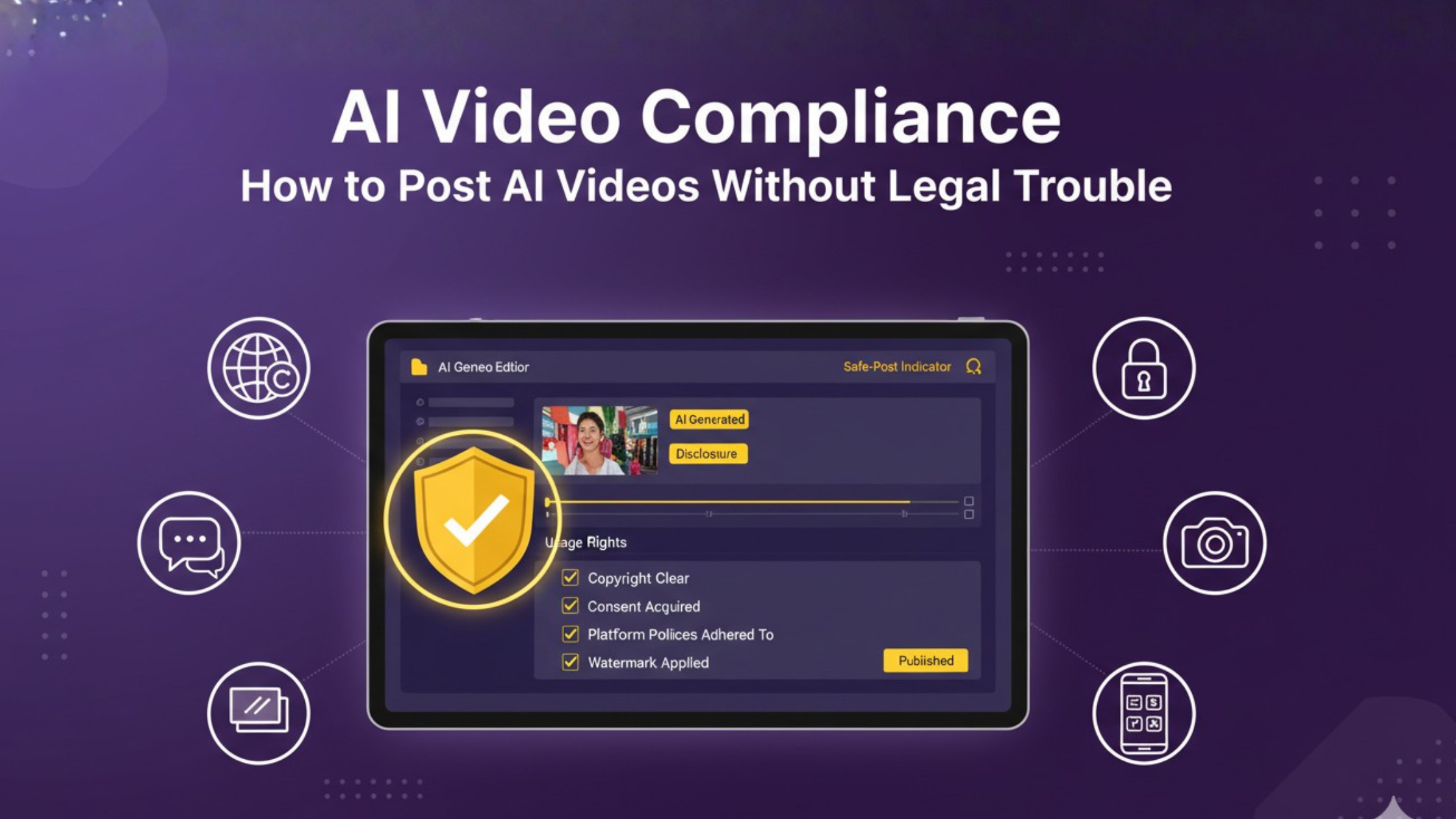
AI video tools save time and make the process fun. On the other hand, if due care is not taken, some legal challenges could arise. In this day and age, companies leverage AI technology for the automation of creating advertisements, reels, product demonstrations, and social media posts. Although this technology is extremely helpful, abiding by the AI Video compliance rules that govern AI videos is critical.
Copyright infringement could occur if one uses unlicensed music, images, or voices associated with a particular brand. This could create legal issues for the brand. The business could sue the brand for unlicensed use of their product.
- Use Only Licensed Material
Make sure that the sound effects and pieces of music, as well as the graphics, have been licensed prior to the creation of the AI films. Always make sure to find out if the material is licensed, copyright exempt, or is in the public domain. This is foundational AI compliance.
- Do Not Imitate Someone’s Voice or Face
AI video generation technology allows for the impersonation of public figures and real people. This is risky and illegal if done without consent. Make sure to get the proper identification permits to identify the individual.
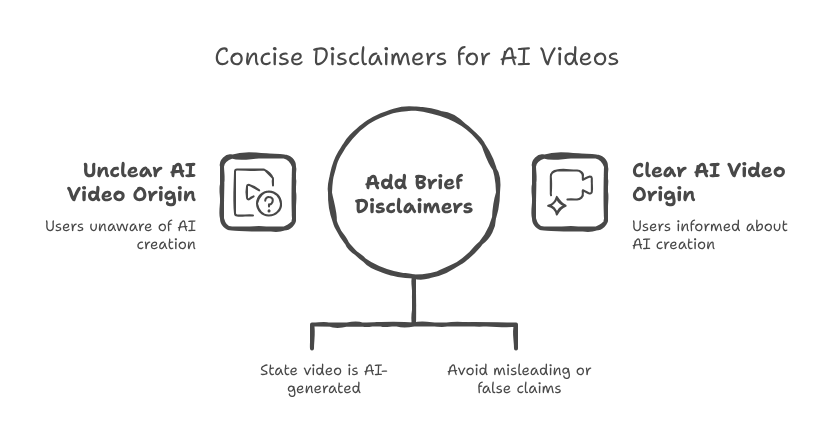
Make Sure They Are Concise and Clear
For AI created videos add brief disclaimers such as “This video is AI-generated.” Such disclaimers protect the brand and make sure the users are informed.
Ensure Background Audio and Music is Checked
You should not select pieces of music from movies, albums or YouTube videos to which you do not hold the rights. Be sure to use royalty-free music. This is another simple way to adhere to compliance for AI videos.
- Follow Platform Rules
Every platform, Instagram, YouTube, and Facebook, has its own rules for AI content. Read the policies before posting your video to avoid takedowns or strikes.