Why do a business need to track emotion-based analytics in 2025
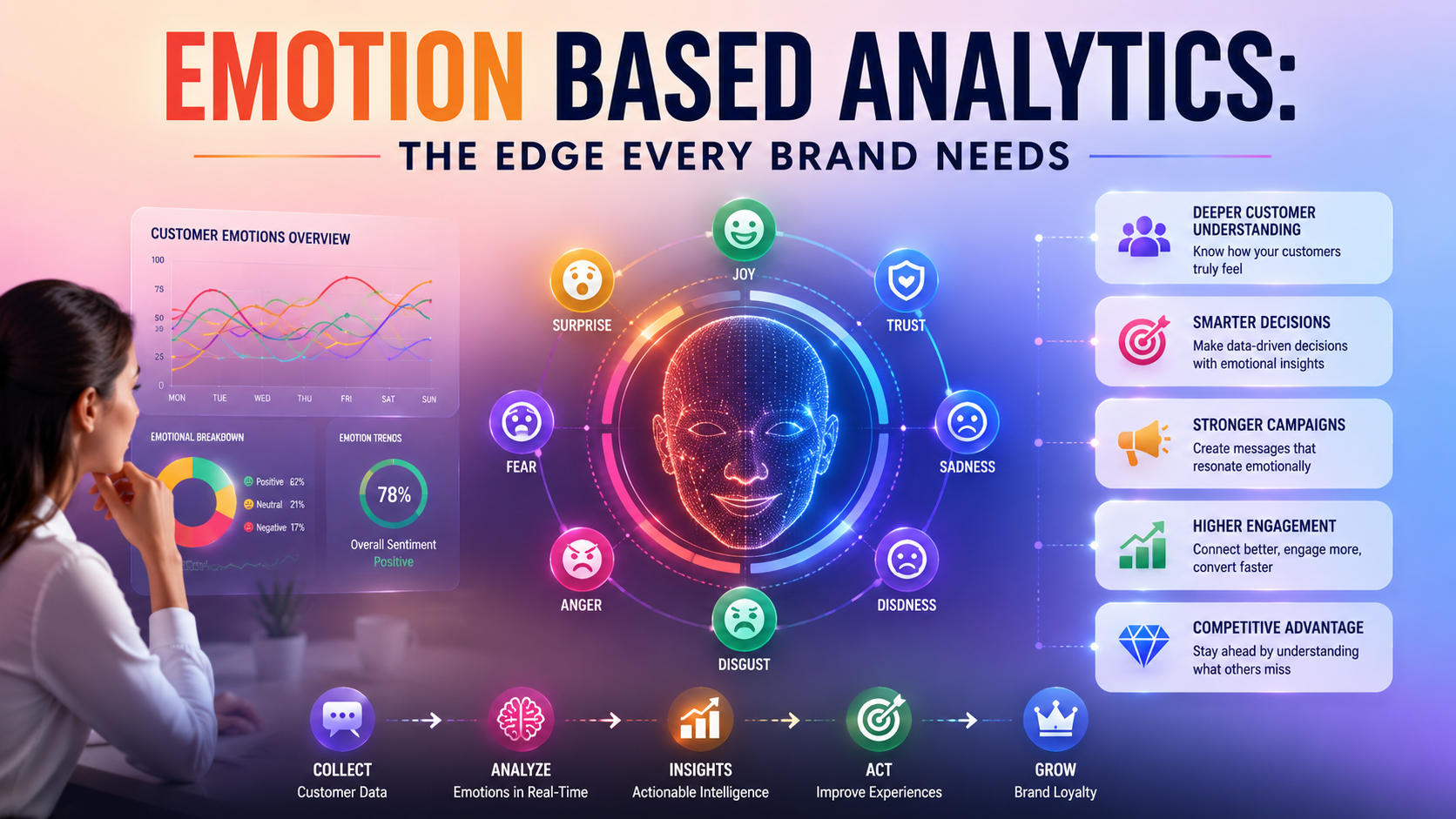
All modern businesses operate according to calculations such as clicks, views, likes, and sales. However, numbers don’t convey the complete picture. A customer views a video, but how did that make them feel? Excited? Happy? Bored? That answer comes from emotion based analytics, and this is where the real game is shifting.
Moving beyond numbers
AI tools currently can analyze minute details to see if tone of voice in a call, facial expressions in a video, and even the way someone types a message signals whether a given individual is frustrated, curious, or delighted based solely on emotion-based analyses. This gives businesses something numbers cannot: an inside look at customer feelings.
The impact of feelings on business
Feelings are a greater influencer than logic in decision making. A positive customer is a higher spend customer; a frustrated customer leaves immediately; and a curious customer wants information. Using emotion based analytics can help businesses to optimize their product, customer care, and their marketing messages at the right time or moment. For example, if artificial intelligence sees that a viewer stops watching an ad at 30 seconds, a brand can cut the weak moment immediately and continue with the strong moment.

Developing stronger trust
The biggest value is trust. Customers know today when a business is just after clicks. If a business listens to emotions, that builds a real relationship. Emotion based analytics is a way to help companies talk in human like manner in spite of using advanced AI.
The new future of data
Data in the absence of emotions lacks depth. Companies that combine numbers and emotions will generate better ads, better products and better experiences. Those who continue to push aside this trend will continue to spend more but produce poorer results.
In summary, the winners of tomorrow will not be those that count clicks, but those that understand hearts. That is the power of emotion based analytics.